Automated Futures Trading Software for Stewards
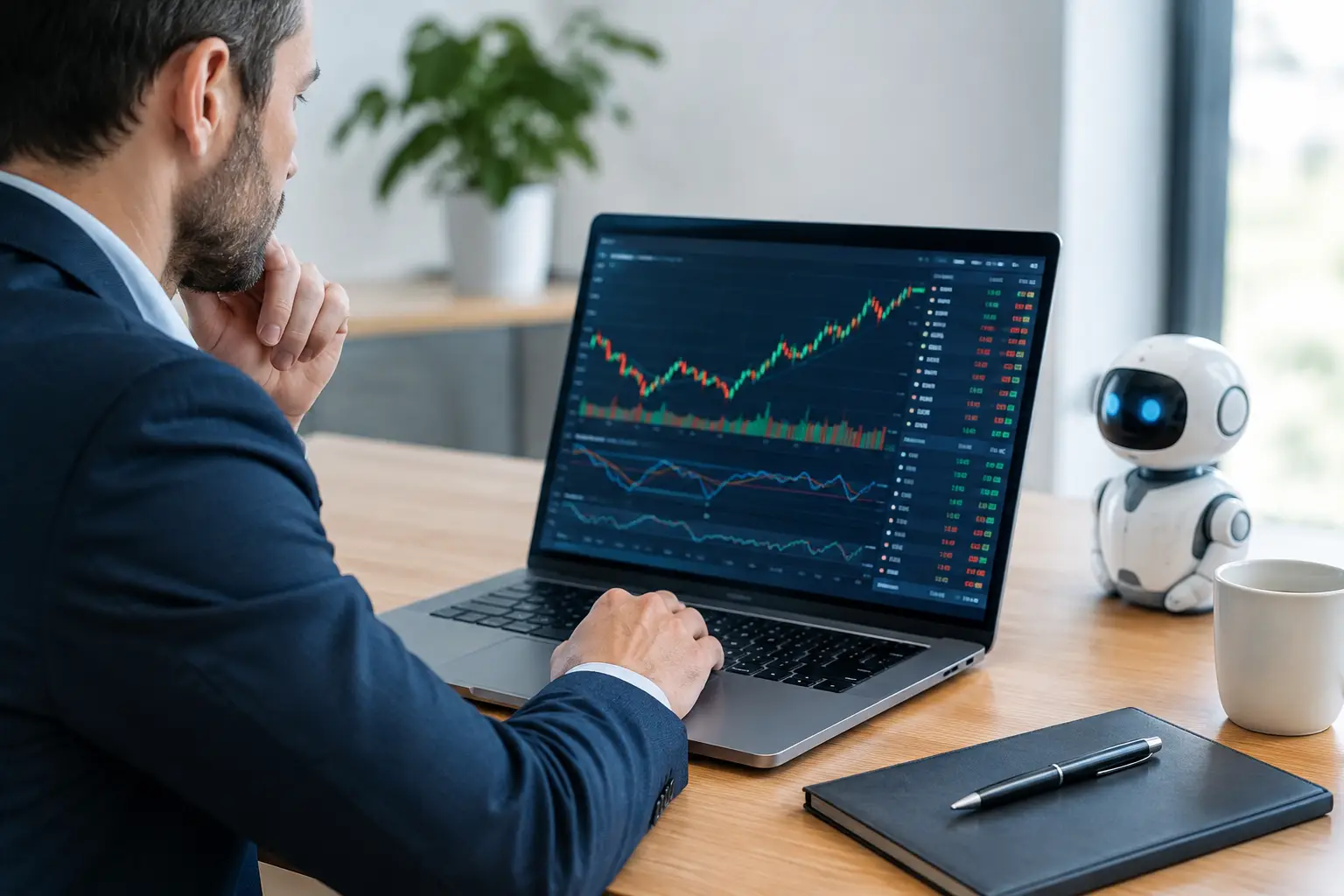
A retirement account can take decades to build and only a few bad decisions to damage. That is why automated futures trading software deserves more scrutiny than most men give it. It is not a shortcut to wealth. It is a machine for carrying out a defined trading plan when fatigue, fear, greed, or distraction would otherwise take the wheel.
For a man responsible for a household, the question is not, "Can this software make trades for me?" The better question is, "Can this system help me execute rules I have earned the right to trust?"
The difference is everything. One is wishful thinking. The other is stewardship.
What Automated Futures Trading Software Is Actually For
Automated futures trading software receives a set of conditions and sends orders to a futures market when those conditions are met. Depending on the design, it may define the entry, protective stop, profit target, position size, trading hours, and the maximum number of trades allowed in a session.
That sounds simple. The discipline behind it is not.
A useful trading system must answer hard questions before the market opens. What market will be traded? What exact pattern qualifies? Where is the trade wrong? How much can be lost? When does trading stop for the day? What happens during major economic releases or abnormal volatility?
If software cannot operate from clear answers, it cannot create them. Automation does not repair a vague strategy. It executes vagueness faster.
This is why serious traders begin with rules. The machine comes after the method, not before it. A man who has never defined his risk is not ready to automate. He is merely giving a computer permission to repeat his confusion.
The Real Enemy Is Discretion Under Pressure
Most traders do not fail because they lack another chart indicator. They fail at the point of execution. They hesitate on a valid entry after two losses. They widen a stop because they do not want to accept being wrong. They take profits early, then chase the next move after it is gone.
The math does not care about their feelings.
Futures markets move quickly, and use makes small mistakes expensive. A defined-risk trade can become an undisciplined loss when a trader decides, in the moment, that his plan no longer applies. This is where properly built automation can be valuable. It treats the rule the same way on Tuesday morning as it does after a difficult night, a busy workday, or an emotional phone call from home.
That consistency matters especially for established men. The executive, business owner, pre-retiree, or father with real obligations does not need another activity that demands constant screen time and drains his attention. He needs an operating procedure that is clear enough to inspect and controlled enough to follow.
Automation may create more time freedom, but only when it is paired with restraint. A machine that trades all day without limits is not freedom. It is unmanaged exposure with better branding.
What a Serious System Must Define
Before licensing or using any automated futures trading software, examine what it controls. Do not be impressed by a glossy dashboard, a string of winning screenshots, or a vendor who will not explain how risk is handled. Ask whether the system has a complete operating framework.
A credible framework should define at least these areas:
- The precise entry conditions, not vague language such as "when momentum looks strong."
- The initial stop and profit-taking logic for every trade.
- Position sizing rules that match the account, contract, and permitted drawdown.
- Daily loss limits, trade limits, and conditions that shut the system down.
- The markets, trading windows, and news-event rules the system is permitted to use.
Every one of these decisions should be visible to the operator. You do not hand responsibility for your family's capital to a black box and call it sophisticated. If you cannot explain the basic risk logic, you cannot responsibly oversee it.
This does not mean you must write code or stare at every candle. It means you must know the boundaries. A steward delegates tasks, not accountability.
The Stop Is Not a Suggestion
A protective stop is where a trade admits it is wrong. That is not a moral failure. It is the cost of operating in a market where outcomes are uncertain.
Software is particularly useful when it enforces that admission without negotiation. It can place a stop immediately with the entry, protect against delay, and prevent the familiar temptation to move the line farther away. No system can eliminate losses. It can prevent the operator from turning a planned loss into an unplanned one.
For many traders, that is the most important feature in the entire stack.
Automation Cannot Fix Bad Position Size
A small account trading oversized contracts is still a small account trading oversized contracts, even if the entries are automated. Position size must reflect the maximum loss allowed per trade and the daily or evaluation drawdown. A software license does not change that math.
This matters in prop-firm environments, where funded-account rules can offer a structured way to develop trading skill without placing retirement assets directly at risk. But evaluations and funded accounts have their own requirements, payout rules, drawdown calculations, and firm-specific restrictions. Read them. Follow them. Do not assume an automation tool makes those rules irrelevant.
Prop firm terms, including funded account sizes and profit splits, are set by the prop firm and may change.
The Trade-Off: Control Versus Convenience
There are two bad extremes. The first is the man who refuses automation because he believes every click proves he is in control. The second is the man who turns on a system he does not understand because he wants trading to become passive.
Neither posture is mature.
Manual trading offers direct observation and can be useful while learning a method. It also exposes the trader to more opportunities for emotional interference. Fully automated execution can improve consistency and reduce screen dependence, but it requires more work upfront: testing the rules, configuring the platform, monitoring connectivity, and knowing what to do if conditions change.
Markets evolve. Platform connections fail. Data feeds can be interrupted. A strategy that behaved acceptably in one type of market may struggle in another. The operator must retain oversight, maintain a process for reviewing results, and know when the machine should stand down.
Automation is not abdication. It is controlled delegation.
Build the Right Order of Operations
The proper sequence is not complicated, though it is demanding.
First, learn a rules-based method until you understand why each condition exists. Second, practice execution in simulation or within the constraints of an appropriate evaluation process. Third, collect enough data to judge whether the method is being followed and whether its risk profile fits your situation. Only then should automation be considered as a way to enforce the playbook.
At SWATrade, this distinction is central to the ladder from education to operator-level software licensing. The goal is not to turn a beginner loose with an algorithm. The goal is to form an operator who understands the rules, respects the limits, and uses automation to make execution more faithful to the plan.
That may not appeal to the man looking for entertainment or overnight results. Good. Serious trading should exclude the unserious.
Questions to Ask Before You Use Any Software
Ask the provider whether the strategy's entries and exits can be understood in plain English. Ask how stops are placed, what happens if an order is rejected, and whether there is a daily loss shutoff. Ask whether the system can be adjusted to account rules without violating its intended risk structure.
Then ask yourself harder questions. Can you tolerate the strategy's normal losing periods without interfering? Have you separated money for trading from capital your family depends on? Are you willing to review performance honestly rather than judging the system after three trades?
If the answer to those questions is no, more automation is not the answer. Better preparation is.
Futures trading involves substantial risk and is not suitable for everyone. Past performance, backtests, simulations, and funded-account results do not indicate future results. The purpose of defined risk is not to remove uncertainty. It is to keep uncertainty from taking more than you can responsibly bear.
The best machine is not the one that promises the most. It is the one that helps a disciplined man keep his word when the market tests it. Build your rules carefully, protect the capital under your care, and let every tool serve the mantle you intend to hand forward.
Futures trading involves substantial risk of loss and is not suitable for every investor. Past performance is not indicative of future results. Prop firm terms, including funded account sizes and profit splits, are set by the prop firm and may change.